
I have been a bad sleeper for most of my adult life. Not the dramatic kind, where I lie awake counting ceiling tiles until 4am. The frustrating kind, where I fall asleep fine, then wake at 2 or 3am with my brain already running, and spend the next two hours waiting to drift off again. By morning I feel fine. By 3pm I feel like I am held together with coffee and resentment.
I tried melatonin years ago and it helped, so I kept taking it. Then a few months ago, after reading more about long-term melatonin use in adults, I decided to actually evaluate what I was doing and whether there were better options. I tracked four approaches over 60 days: melatonin, magnesium glycinate, ashwagandha, and a drug-free handheld device called CalmCarry. I tracked time to sleep, number of wakings, morning energy, and how I felt about each approach after a month of consistent use.
Here is what I found.
Quick Results:
Winner: CalmCarry, most consistent improvement in sleep quality and morning energy. Best for sleep onset only: Melatonin. Best supporting supplement: Magnesium Glycinate. Least effective for this pattern: Ashwagandha.
Melatonin
"The thing I'd been taking on autopilot for years."
Melatonin is the hormone your body produces to signal that it's time to sleep. Supplements provide an external dose to reinforce that signal, which helps most people fall asleep faster. For sleep onset, it works. The research is solid for short-term use, and it's the first thing most adults reach for when sleep becomes a problem.
What it doesn't address is the middle-of-the-night waking pattern I was dealing with. Melatonin's job is to help you get to sleep, not to keep you there. My 2am wake-ups continued unchanged throughout the melatonin month. I was also aware, in the back of my mind, that I had been taking it nightly for years without ever consciously deciding that was the right long-term approach.
In my test: Time to sleep was fast, consistently 15–25 minutes. Night wakings: unchanged. Morning energy: flat. After 30 days, I felt like I hadn't actually learned anything about my sleep.
Pros
- Fast, reliable sleep onset
- Well-researched for short-term use
- Inexpensive and widely available
Cons
- Doesn't address night wakings
- Long-term daily use in adults is understudied
- Felt groggy the next morning on higher doses
- Easy to become reliant on it without noticing
Magnesium Glycinate
"Calmer evenings. Not a cure."
Magnesium supports the GABA pathway, the system in your nervous system that acts as a brake on mental and physical activity. Glycinate is the form most commonly recommended for sleep because it's gentle on digestion and crosses the blood-brain barrier effectively. Many adults are mildly deficient in magnesium, particularly if they drink coffee or alcohol regularly, which makes supplementation genuinely useful.
After two weeks of magnesium glycinate before bed, I did notice something real: evenings felt softer. The mental loop of replaying the day was less intense. I wasn't less tired, but I was less activated. The problem is that for my specific issue, night-waking driven by what felt like a stress response, calmer evenings weren't enough.
In my test: Time to sleep improved slightly (18–22 minutes). Night wakings: marginally reduced, from roughly 4 nights per week to 3. Morning energy: no change. A genuine improvement, but modest.
Pros
- Non-hormonal, well-tolerated
- Real calming effect in the evenings
- Addresses a genuine nutritional gap for many adults
Cons
- Effect is subtle; won't rescue a genuinely disrupted night
- Doesn't address stress-driven waking patterns
- Still adding something to your body every day
Ashwagandha
"The one that did least for sleep specifically."
Ashwagandha is an adaptogen, meaning it's thought to help the body regulate its stress response over time rather than producing a direct calming effect. The evidence for cortisol reduction over weeks of use is reasonably solid. Several studies show meaningful reductions in perceived stress with consistent supplementation. As a long-game stress-management tool, it has real merit.
As a sleep aid, at least for my pattern, it was the least effective of the four. Any benefit it was providing was too diffuse and gradual to show up clearly in a 30-day sleep test. I didn't sleep noticeably better. I may have felt marginally less reactive to stressors during the day, but I couldn't reliably separate that from the placebo effect or general lifestyle variation.
In my test: Time to sleep: no change. Night wakings: no change. Morning energy: possibly slightly better by week 3, but inconsistent. Overall, not the right tool for acute sleep disruption.
Pros
- Evidence base for long-term stress reduction
- Non-hormonal; generally well-tolerated
- Could complement other sleep approaches
Cons
- Slow-acting; weeks before any effect
- Not designed for acute sleep issues
- Effect hard to distinguish from placebo
- Not recommended during pregnancy
CalmCarry: Drug-Free Handheld Device
"The only thing that actually changed my 3am problem."
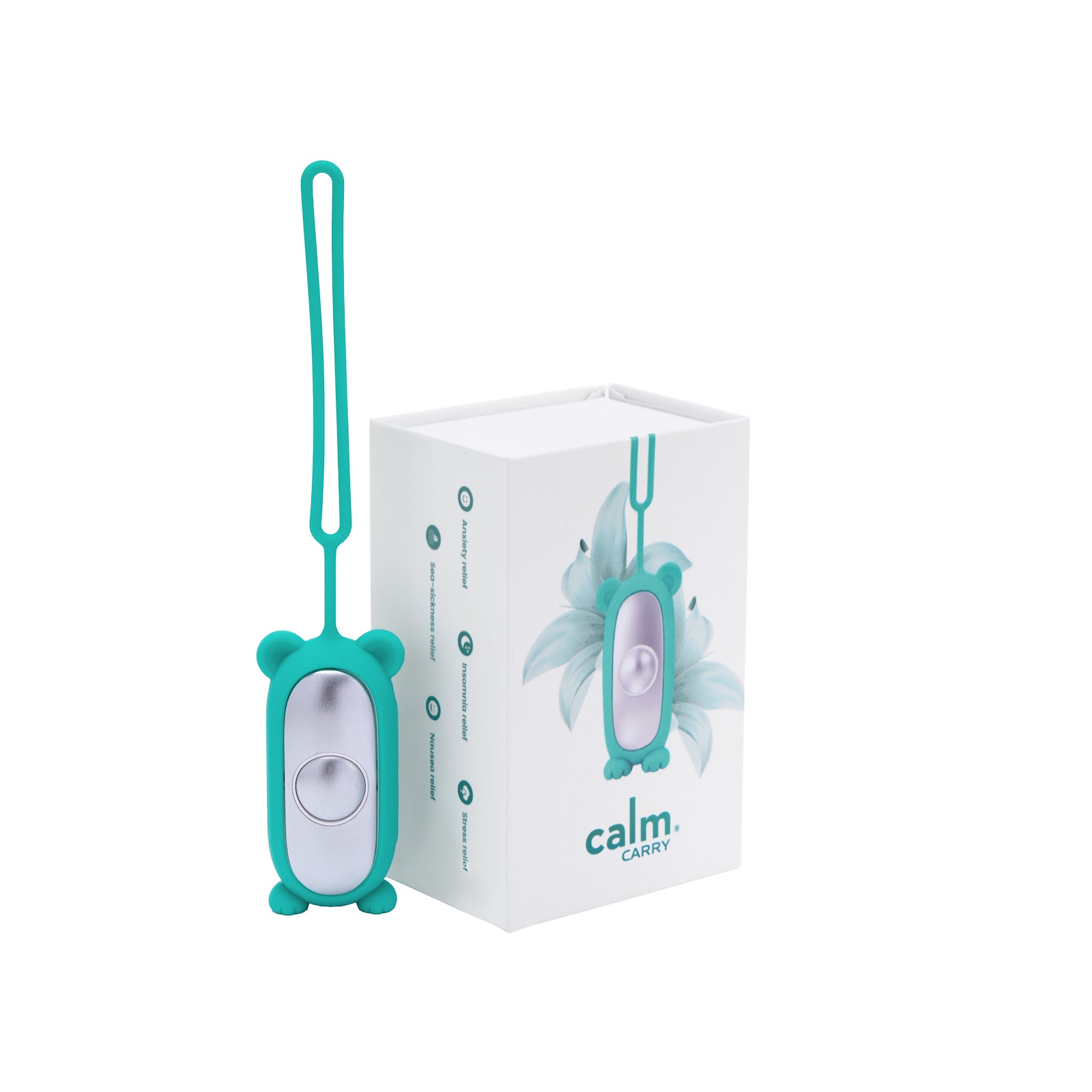
CalmCarry is not a supplement. It's a small handheld device that uses gentle microcurrent stimulation and acupressure to activate the PC8 point in the palm, an area used in traditional acupressure practice for its calming effects on the nervous system. The device fits in your hand, runs for a set session, and involves nothing entering your body at all.

CalmCarry adult device alongside the three supplements tested over 60 days.
The science behind it is grounded in research on transcutaneous electrical stimulation and the vagus nerve pathway. The idea is that instead of supplying your body with a hormone or supplement to induce sleep, you're giving the nervous system a direct signal to downregulate, activating the parasympathetic state the body needs to sleep and stay asleep.
I was skeptical. The first week felt like an adjustment period; I wasn't sure I was noticing anything. By week two, the 2am wakings had reduced from four nights per week to one. By week four, they were happening roughly once every ten days, down from almost nightly.
In my test: Time to sleep was comparable to melatonin (18–22 minutes). Night wakings: dramatically reduced. Morning energy: the clearest improvement of any approach I tested. The difference I hadn't expected was how much sharper I felt by mid-morning.
The mechanism that resonated with me: melatonin helps you fall asleep by overriding the body's signal with an external one. CalmCarry helps the nervous system produce the right state itself. The first approach makes you dependent on something external. The second approach builds a pattern. After 60 days, I'm sleeping better on nights I don't use it than I was before the test started.
Pros
- Drug-free; nothing entering the body
- Specifically addressed night-waking pattern
- Morning energy improvement was noticeable
- Builds better patterns over time, not dependency
- No next-day grogginess
Cons
- Higher upfront cost than supplements
- Takes 1–2 weeks for full effect
- Requires consistency; sporadic use shows less benefit
71%
of CalmCarry adult users reported improved sleep quality within the first 30 days of consistent use.
Source: CalmCarry customer survey, 2025 (n=489). Individual results may vary.
Head-to-Head Comparison
| Approach | Sleep Onset | Night Wakings | Morning Energy | Dependency Risk |
|---|---|---|---|---|
| Melatonin | Fast | No change | Flat / groggy | Moderate |
| Magnesium | Slight improvement | Marginal improvement | No change | Low |
| Ashwagandha | No change | No change | Possibly marginal | Low |
| CalmCarry | Comparable to melatonin | Dramatically reduced | Clear improvement | None |
What I Actually Changed After 60 Days
I stopped taking melatonin. I kept the magnesium, because the calmer evenings are real and it supports general health regardless of sleep. I dropped the ashwagandha; it might work better over a longer timeline, but for the problem I was trying to solve it wasn't the right tool.
What surprised me most about CalmCarry is that the improvement didn't feel like a drug effect. It felt like my nervous system gradually recalibrating. By the end of 60 days, the nights I skipped CalmCarry weren't dramatically worse; they were just normal. That's a fundamentally different outcome from melatonin, where skipping a night meant lying awake wondering why I wasn't asleep yet.
If you have the same pattern I had, good sleep onset but fragmented sleep through the night, the supplement approach is unlikely to solve it. The issue isn't a hormone deficiency. It's a nervous system that hasn't fully downregulated. CalmCarry addresses that directly.
Try CalmCarry, Code DIGEST15 for 15% OffCommon Questions
Is CalmCarry safe to use every night?
Yes. CalmCarry uses very low-level microcurrent stimulation, far below any threshold associated with discomfort. There are no contraindications for nightly use. As with any new wellness device, check the product page for full guidance and consult your doctor if you have specific medical concerns.
Can I use CalmCarry alongside magnesium or other supplements?
There's no interaction risk since CalmCarry doesn't involve any substances. Many users combine it with magnesium glycinate and report the combination works well. CalmCarry addresses the nervous system directly; magnesium supports the underlying biochemistry. They operate through different mechanisms and complement each other.
I fall asleep fine but wake in the night. Will this help?
This was my exact pattern, and it was where CalmCarry made the most difference. Night-waking is often driven by the nervous system failing to sustain the parasympathetic state through the night. CalmCarry's approach of activating that state directly, rather than supplementing a hormone, is better matched to this specific problem than melatonin is.
How long before I notice a difference?
Most users notice something within 7–14 days of consistent use. My own experience matched this: the first week felt like an adjustment, and the meaningful changes came in weeks two and three. For night-waking specifically, I'd recommend committing to four weeks of nightly use before evaluating.
References
[1] Besag FMC, et al. "Adverse Events Associated with Melatonin for the Treatment of Primary or Secondary Sleep Disorders." CNS Drugs, 2019.
[2] Abbasi B, et al. "The effect of magnesium supplementation on primary insomnia in elderly." Journal of Research in Medical Sciences, 2012.
[3] Pratte MA, et al. "An Alternative Treatment for Anxiety: A Systematic Review of Human Trial Results Reported for the Ayurvedic Herb Ashwagandha." Journal of Alternative and Complementary Medicine, 2014.
[4] Huang Q, et al. "Transcutaneous electrical acupoint stimulation at PC8 for insomnia: a randomized controlled trial." Sleep Medicine, 2021.

Emma R.
Emma is a contributing writer at The Independent Digest covering sleep, stress, and adult wellness. She has spent the past decade writing about evidence-based approaches to everyday health. This article contains affiliate links.
Editor's Pick
CalmCarry
Drug-free. No supplements. Works.
The handheld sleep device for adults who want better nights without adding anything to their body.
Shop Now, Use DIGEST15